The Hidden History of the Resurrection

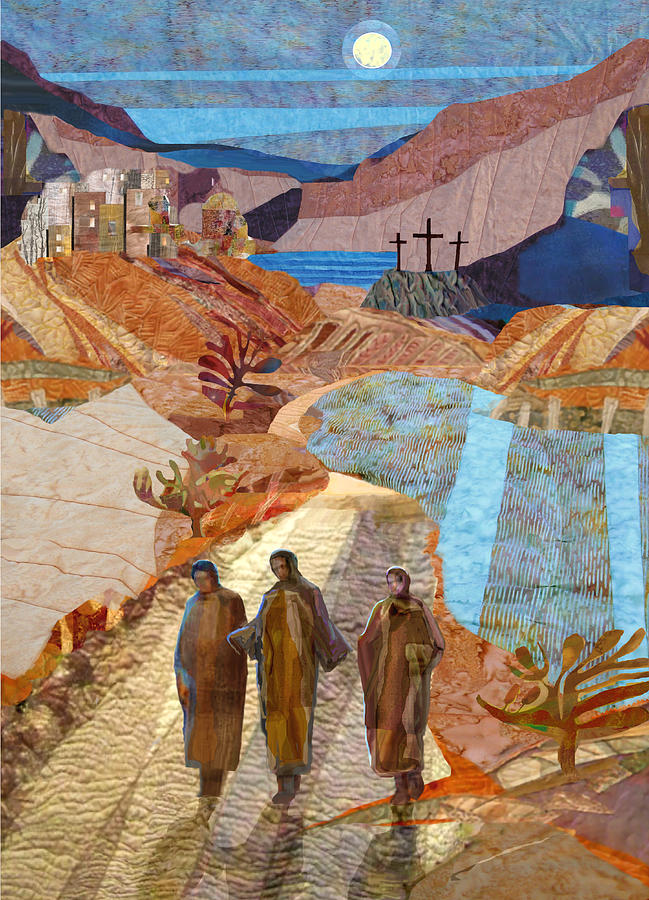
"For us Christians, Saints and the supernatural are the things that make history…and it is all the rest that we should be inclined to regard as legendary." Charles Peguy The life of Jesus Christ as the ‘true human’ represents a life of perfect freedom. The radical freedom of Christ is not the consumerist, sexualized, autonomous … Continue reading The Hidden History of the Resurrection

6 Theses for Christian Politics

In the increasingly hot climate of the culture wars in the United States, and with some of that animosity creeping across the border into our own communities, I would like to put forward six thesis for a Christian politics. In doing this, I’m not trying to change anyone’s political views (though that might follow as … Continue reading 6 Theses for Christian Politics

Towards an Anabaptist Epistemology: A Non Violent Way of Knowing

Having summarized the broad outlines of an Anabaptist political theology, I will now draw out the epistemological implications of this stance. Some broad definitions might be helpful before we proceed. When I speak of “Anabaptism,” I am thinking of two particular, closely connected views. First, there is the commitment to Christian nonviolence or pacifism, the … Continue reading Towards an Anabaptist Epistemology: A Non Violent Way of Knowing

Christianity, Creation and Climate Change

This piece comes in the wake of the First Reformed movie review and is my attempt to think through some of the themes and questions raised by that film, as well as gather my own thoughts on the issue of Christianity and Creation care.  

A Theology of Weakness

In my last piece, I contrasted the powerless way of God the baby, with the satanic way of Herod the King. For those with the eyes and ears to see, my piece was filled with allusions to the failures of the Church.

The Rationality of the Foolishness of Christ

One of the most profound sections of the New Testament is found in first Corinthians. The author writes: For the message of the cross is foolishness to those who are perishing, but to us who are being saved it is the power of God. What is the message of the Cross? The message of the cross is that … Continue reading The Rationality of the Foolishness of Christ

Faith and Truth

There is an oft quoted line from Jacques Derrida, “There is nothing outside of the text.” By this he doesn’t mean that there is no real world, but rather, that all we can ever do is interpret. We can never get beyond interpretation to the pure realm of unmediated experience: to see is to interpret. … Continue reading Faith and Truth

What the New Atheists and the Christian Apologists Miss about Jordan Peterson

One question I have been grappling with for a few months now is this: What is it about Jordan Peterson that subverts the approach of both the new atheists and the evangelical apologists? I have noticed that there is a pattern of thinking or, as I like to put it a “mode of being” that … Continue reading What the New Atheists and the Christian Apologists Miss about Jordan Peterson

Postmodernism as God’s Judgement on Christendom

“Christendom has done away with Christianity, without being quite aware of it,” Kierkegaard wrote in 1850, “the consequence is that if anything is to be done, one must again try to introduce Christianity into Christendom.” This notion of “introducing Christianity into Christendom” is near the heart of Kierkegaard’s project. It helps explain Kierkegaard’s curious method … Continue reading Postmodernism as God’s Judgement on Christendom

The Meaning Crisis, The God-man and Communal Living

Walker Pearcy’s novel, The Moviegoer is a story of the modern condition. The main character, Binx Bolings feels “sunk in everydayness,” battles malaise, and searches for God knows what. Binx describes feeling like an “anyone” who is “anywhere.” He, like many in the modern age, experiences a sense of being uprooted, abstracted out of existence, … Continue reading The Meaning Crisis, The God-man and Communal Living

Fideistic Morality: Responding to Adam Friended and Esther O’Reilly

Esther O'Reilly and Adam Friended recently had a conversation on evolution and morality which sparked some conversation within my online circles. After reading Paul Vanderklay's response to the conversation, on his blog, I thought I would add my own thoughts the conversation.  I believe there are four stages of morality, the greater your conception of … Continue reading Fideistic Morality: Responding to Adam Friended and Esther O’Reilly

Kierkegaard critiques the Objective Approach

Prelude “Away from Speculation! Back to Christianity!” Kierkegaard writes. This short statement encapsulates one of the central themes of Kierkegaard’s thought: (the parts I’ve read anyhow) that Christianity is to be approached subjectively, not objectively. The objective approach, is, to Kierkegaard, the dispassionate pursuit of WHAT is true. The individuals personal feelings and passions are … Continue reading Kierkegaard critiques the Objective Approach

The Particular Individual

In the last few days/weeks I have written several posts dealing with broad, abstract things: Truth, goodness, beauty, the monarchical vision, God, heaven and earth and so fourth. I do have a weakness for the broad and abstract, the heavenly instead of the earthly and the practical. One thing I’ve noticed is that Jesus doesn’t … Continue reading The Particular Individual

Social Media and I: The Pernicious Effects of Social Media.

The following essay is an extended version of a speech I gave on the topic of social media. The piece is directed to a Christian and specifically Hutterite audience. I have omitted some culture-specific references that don't apply to most readers. I don’t use social media. In the last few years, I have deleted my … Continue reading Social Media and I: The Pernicious Effects of Social Media.

What is Truth? Part 3: The Incarnation

This is part three of a three part series. Part one can be found here, part two can be found here. This is where we return to our original question, how can a person, Jesus, claim to be the truth? To answer this question, we need to outline the Christian narrative in broad strokes, beginning … Continue reading What is Truth? Part 3: The Incarnation