
Faith in the gift of eternal life, rather than being an otherworldly form of wish-fulfilment, is actually what allows us to embrace our mortal limits and find joy in the gratuity of creation.
Hope in Eternal Life and Being Content to be a Creature

Faith in the gift of eternal life, rather than being an otherworldly form of wish-fulfilment, is actually what allows us to embrace our mortal limits and find joy in the gratuity of creation.

For those who love the highest good that is God, there is a vertical dimension which transcends the horizontal. This makes to possible step outside of the escalation, to see the humanity in the other, and ultimately, to forgive. This allows us to acknowledge that while the goods of the earthly city are genuine goods, they are not ultimate goods.
This is going to be a bit of a different post in that it is one intended more for a Hutterite audience. I assume other readers could benefit from this as well, but I see myself here as entering a Hutterite conversation. Incidentally, this post sort of serves as a summary of where I find … Continue reading 15 Thesis for Hutterite Renewal

This is an essay I wrote for a Philosophy class on American philospher Stanley Cavell and the plays of Shakespeare. I don't like to post my academic essays on this blog, but this one is a particularly important piece for me. “You have as much laughter as you have faith.” Martin Luther Shakespeare’s play Othello … Continue reading Luther and Othello: Skepticism, Anfechtung, and “the Doubting Disease”

This is an essay I wrote for a philosophy class on Aquinas and Wittgenstein. This might be more technical then some of my pieces on here. Its central claim that, "God is revealed to us through and not despite our finitude" seems relevant to some of the themes I have been developing on here. The … Continue reading Aquinas and the Revelation of the Divine Other: Language, Creaturehood, and Participation

He is the image of the invisible God, the firstborn of all creation; for in him all things in heaven and on earth were created, things visible and invisible, whether thrones or dominions or rulers or powers—all things have been created through him and for him. He himself is before all things, and in him … Continue reading Advent 2: Joining Creation’s Praise

When the Lord restored the fortunes of Zion, we were like those who dreamed. Our mouths were filled with laughter, our tongues with songs of joy. Then it was said among the nations, “The Lord has done great things for them.” The Lord has done great things for us, and we are filled with joy. … Continue reading Advent: Sowing in Grief
Keep us interesting.
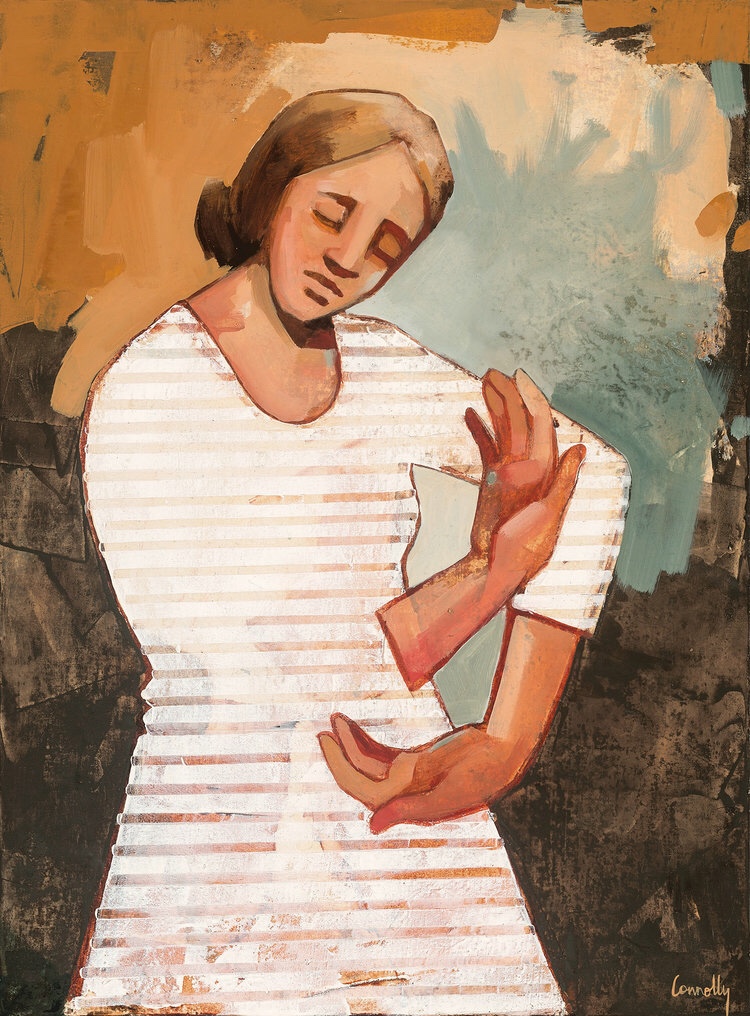
Scripture points us to another tension that we must live within. On the one hand, we long for the coming day of peace. On the other hand, we are called not to worry, not to be anxious, and not to live in the future. What does it mean to live without worrying when our hopes for the future are crushed? When it does not seem like these messianic promises have any hope of being fulfilled? When our hunger and thirst is left without satisfaction?

“Human beings practice technology [rhetoric], not theology [prayer]”.

I wrote the following piece for a course I am taking called Ethical Living in a Technological Society. I was asked to reflect on my current views on technology and tried to do so with as much clarity and self criticism as I could. I thought this piece would be a good edition to the … Continue reading Reflection on Current Views on Technology

Creation’s praise and humanity’s praise are inextricably interwoven: the central argument of this essay is that it is the human refusal to praise that ruptures creation's praise and is then deaf to its cries for mercy. On the other hand, right human praise can hear, attend to, and join with the praise of creation.
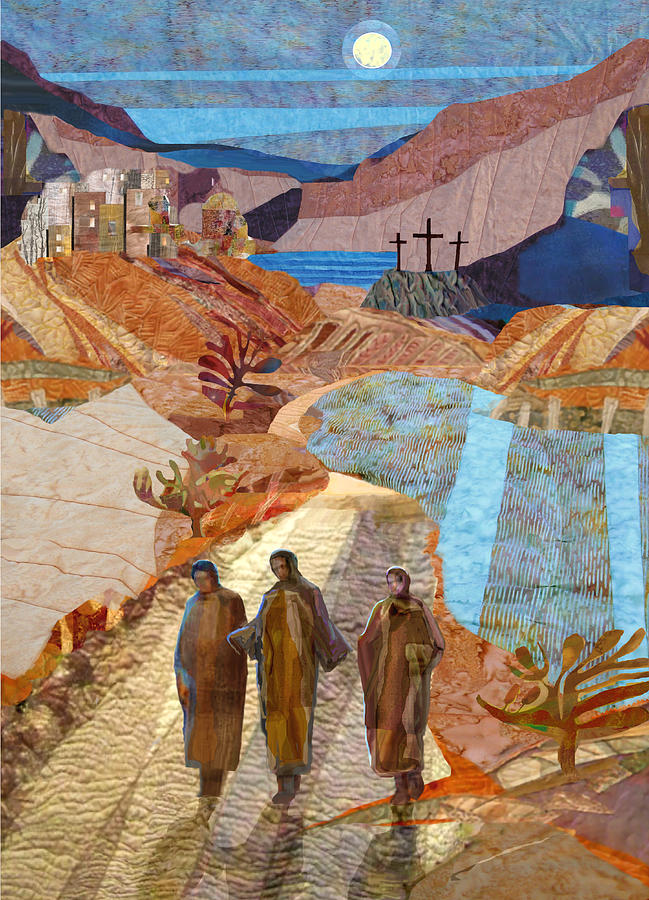
"For us Christians, Saints and the supernatural are the things that make history…and it is all the rest that we should be inclined to regard as legendary." Charles Peguy The life of Jesus Christ as the ‘true human’ represents a life of perfect freedom. The radical freedom of Christ is not the consumerist, sexualized, autonomous … Continue reading The Hidden History of the Resurrection

God's great frontal assult is the push out from the uterus; his first battle cry is the sound of a newborn. The creator and sustainer of heaven and earth, is sustained by the milk of his mother's breast and the warmth of her body.
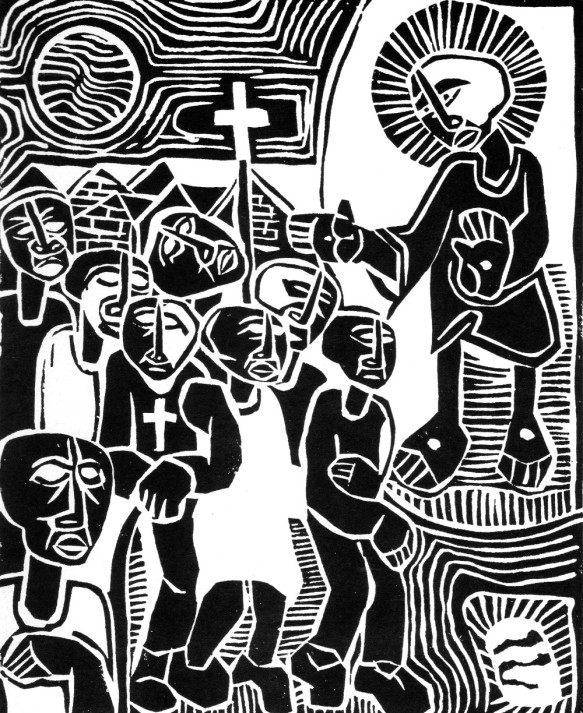
I recently heard that the foundational principle of some libertarian or anarchist political theories is the right to own private property. It is precisely this principle that leads these thinkers to reject all forms government coercion, because they violate this most basic human right to autonomy and self-sufficiency. As far as I'm concerned, this position … Continue reading Christ and Possessions

Note to Reader, I received a free review copy of this documentary in exchange for this review. I've tried to remain impartial and unbiased in what follows. In one of the opening lines of Postcards from Babylon, Brian Zhand proclaims: “I am not following a donkey, I am not following an elephant, I am following … Continue reading Postcards From Babylon Documentary Review

In Loving Memory. August 6, 1965 - August 6, 2020.

For those of you feeling intimidated by my 21 part series on A Secular Age, this shorter summary could help you get a sense of the argument Taylor is making. I've organized this shorter summary into 11 different sections and added some links to the corresponding chapter summary that each section is drawn from. At … Continue reading A Secular Age: Shorter Summary

In the increasingly hot climate of the culture wars in the United States, and with some of that animosity creeping across the border into our own communities, I would like to put forward six thesis for a Christian politics. In doing this, I’m not trying to change anyone’s political views (though that might follow as … Continue reading 6 Theses for Christian Politics

I was planing to get this piece published when I first wrote it back in April. When that fell through, I decided to make some changes and repost it here.

Having summarized the broad outlines of an Anabaptist political theology, I will now draw out the epistemological implications of this stance. Some broad definitions might be helpful before we proceed. When I speak of “Anabaptism,” I am thinking of two particular, closely connected views. First, there is the commitment to Christian nonviolence or pacifism, the … Continue reading Towards an Anabaptist Epistemology: A Non Violent Way of Knowing

I was watching this conversation between Pageau and Vervaeke, moderated by Paul Vanderklay and left some long comments in the comment section that I thought I would repost here for future reference. It strikes me that much of what I've been trying to communicate through this blog was expressed in that conversation. My series on … Continue reading Notes on Vervaeke/Pageau Conversation

This piece is the first of a series of posts I intend to write on the topic of Anabaptist Epistemology. This piece will focus on political theology, the second on implications and the third on the positive outlines of an Anabaptist Epistemology.

Alan Kreider begins his marvellously titled book, The Patient Ferment of the Early Church, with some striking observations about mission in the early church. Kreider notes that while the early Christians produced three texts on patience (Tertulian, Cyprian, Augustine), they did not produce a single text on evangelism. Furthermore, early Christians did not encourage their … Continue reading The Patient Ferment of the Early Church: A Summary

This piece comes in the wake of the First Reformed movie review and is my attempt to think through some of the themes and questions raised by that film, as well as gather my own thoughts on the issue of Christianity and Creation care.

The following movie review is born out of a long email exchange I had with Jarrod, a friend I met through this blog. It was through the long emails that we sent back and fourth that I came to see just how profound a film this is. I have tried in this blog post, to put Jarod and I's conversations into narrative form, giving a reading of the film in its own terms. I find that even after having written this post, there is much left unprobed, many questions left unanswered, and there is much left to grapple with. I found myself while writing, to be speaking at several different levels at once. I will leave the reader to decide which level is most illuminating. Spoilers ahead, proceed at your own risk.

In my last piece, I contrasted the powerless way of God the baby, with the satanic way of Herod the King. For those with the eyes and ears to see, my piece was filled with allusions to the failures of the Church.

The following piece is excerpted from a upcoming presentation I am doing on the Zeitgeist. In the presentation, I outline six categories: Technique, Deconstruction and Awareness, Alternatives, Despair, Ideologies and Longing. In this piece, I outline the first feature of the Zeitgeist, Technique.

One of the most profound sections of the New Testament is found in first Corinthians. The author writes: For the message of the cross is foolishness to those who are perishing, but to us who are being saved it is the power of God. What is the message of the Cross? The message of the cross is that … Continue reading The Rationality of the Foolishness of Christ

There is an oft quoted line from Jacques Derrida, “There is nothing outside of the text.” By this he doesn’t mean that there is no real world, but rather, that all we can ever do is interpret. We can never get beyond interpretation to the pure realm of unmediated experience: to see is to interpret. … Continue reading Faith and Truth

There is a line from Nietzsche that should give every thoughtful Christian pause: “Faith is not wanting to know what is true.” This is a more profound articulation of what has been heard from other quarters, that faith is a ‘crutch’ for the weak (this might be Nietzsche as well), wish fulfilment, or “believing what … Continue reading Faith and Uncertainty

One question I have been grappling with for a few months now is this: What is it about Jordan Peterson that subverts the approach of both the new atheists and the evangelical apologists? I have noticed that there is a pattern of thinking or, as I like to put it a “mode of being” that … Continue reading What the New Atheists and the Christian Apologists Miss about Jordan Peterson

“Christendom has done away with Christianity, without being quite aware of it,” Kierkegaard wrote in 1850, “the consequence is that if anything is to be done, one must again try to introduce Christianity into Christendom.” This notion of “introducing Christianity into Christendom” is near the heart of Kierkegaard’s project. It helps explain Kierkegaard’s curious method … Continue reading Postmodernism as God’s Judgement on Christendom

Walker Pearcy’s novel, The Moviegoer is a story of the modern condition. The main character, Binx Bolings feels “sunk in everydayness,” battles malaise, and searches for God knows what. Binx describes feeling like an “anyone” who is “anywhere.” He, like many in the modern age, experiences a sense of being uprooted, abstracted out of existence, … Continue reading The Meaning Crisis, The God-man and Communal Living

Esther O'Reilly and Adam Friended recently had a conversation on evolution and morality which sparked some conversation within my online circles. After reading Paul Vanderklay's response to the conversation, on his blog, I thought I would add my own thoughts the conversation. I believe there are four stages of morality, the greater your conception of … Continue reading Fideistic Morality: Responding to Adam Friended and Esther O’Reilly
Disclaimer: I am no philosopher, I am just a layperson trying to figure stuff out, so the definitions of words I'm using here, might not be the most precise. I don't get Jordan Peterson's frustration with the Postmodernists, he has very much been influenced by Postmodernism. Peterson is no Modernist, and in some respects he's … Continue reading Jordan Peterson the Postmodernist

Prelude “Away from Speculation! Back to Christianity!” Kierkegaard writes. This short statement encapsulates one of the central themes of Kierkegaard’s thought: (the parts I’ve read anyhow) that Christianity is to be approached subjectively, not objectively. The objective approach, is, to Kierkegaard, the dispassionate pursuit of WHAT is true. The individuals personal feelings and passions are … Continue reading Kierkegaard critiques the Objective Approach

In the last few days/weeks I have written several posts dealing with broad, abstract things: Truth, goodness, beauty, the monarchical vision, God, heaven and earth and so fourth. I do have a weakness for the broad and abstract, the heavenly instead of the earthly and the practical. One thing I’ve noticed is that Jesus doesn’t … Continue reading The Particular Individual
The following essay is an extended version of a speech I gave on the topic of social media. The piece is directed to a Christian and specifically Hutterite audience. I have omitted some culture-specific references that don't apply to most readers. I don’t use social media. In the last few years, I have deleted my … Continue reading Social Media and I: The Pernicious Effects of Social Media.
 Coffee with Kierkegaard