
One cannot help but think that the problem that Lucretius is trying to address is the same one that Luther is seeking to answer in a different way.
Lucretius, Luther, and Charles Taylor

One cannot help but think that the problem that Lucretius is trying to address is the same one that Luther is seeking to answer in a different way.

I wrote the following piece for a course I am taking called Ethical Living in a Technological Society. I was asked to reflect on my current views on technology and tried to do so with as much clarity and self criticism as I could. I thought this piece would be a good edition to the … Continue reading Reflection on Current Views on Technology
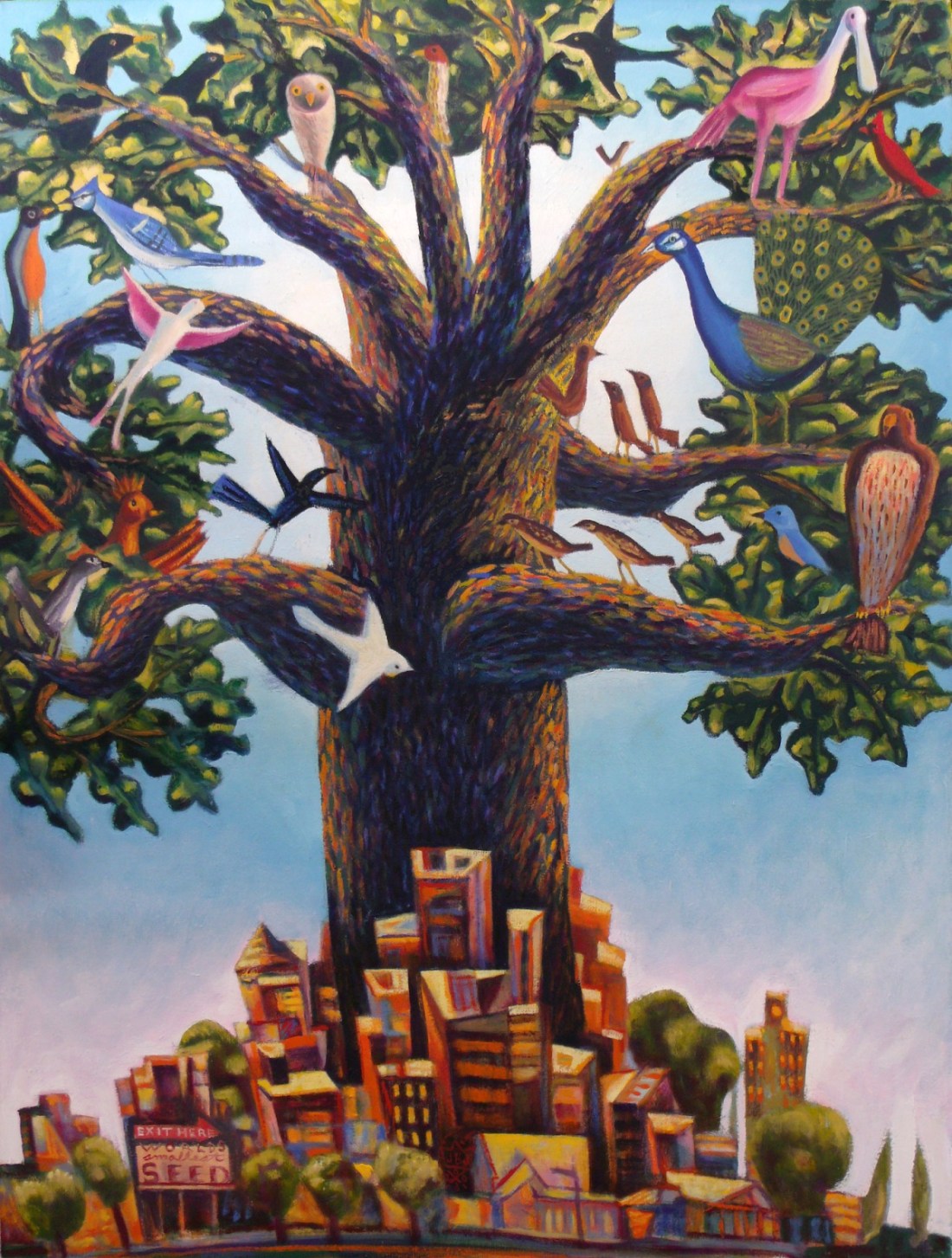
He put before them another parable: “The kingdom of heaven may be compared to someone who sowed good seed in his field; but while everybody was asleep, an enemy came and sowed weeds among the wheat, and then went away. So when the plants came up and bore grain, then the weeds appeared as well. And the slaves … Continue reading Parables of the Kingdom

In this chapter Taylor looks at the phenomenon of conversion in a Secular age, those people who “broke out of the immanent frame” into a larger perspective of Transcendence. These are people who come to recognize—perhaps through a conversion experience or via some other path—that there is more, that the immanent frame is insufficient. Taylor … Continue reading Chapter 20: Conversions
In this chapter, Taylor explores some of the points of cross pressure, tension, unease for modern unbelief. The places where the buffered identity and immanent frame have a hard time remaining “closed,” and an “open” take suggests itself. Taylor's exploration in this chapter can't “decide the issue between belief and unbelief” but it can “bring … Continue reading Chapter 19: Unquiet Frontiers of Modernity
In this chapter, Taylor continues to explore the tensions between belief and unbelief, now turning to look at issues surrounding the meaning of life. He zooms in on the question of evil and suffering. The question that evil and suffering raises is not one of theodicy (this is only a problem for belief) but rather, … Continue reading Chapter 18: Dilemmas 2
In this chapter, Taylor looks at some of the tensions and dilemmas that play out between aspirations to transcendence and ordinary human flourishing. Some of the cross pressures between "open" and "closed" spins. He begins by describing the “triumph of the therapeutic” over the older moral/spiritual perspective: “One of the most striking fruits... has been … Continue reading Chapter 17: Dilemmas 1
In this chapter, Taylor describes the cross pressures between unbelieving and believing positions in modernity. Taylor begins by restating his resistance to the standard secularization thesis; that religion cannot but decline in the conditions of modernity. Taylor thinks that this kind of account of the place of religion in modern society presupposes unbelief, and is … Continue reading Chapter 16: Cross Pressures
In the previous chapters, Taylor has taken us through a genealogy of the emergence of our Secular Age, now, in the final few chapters, he turns to describe the experience, the “conditions of belief” of our Secular Age. He is now ready to return to the question he first asked in the introduction: “why is … Continue reading Chapter 15: The Immanent Frame
In this chapter Taylor explores the place of religion in the age of Authenticity. As we discussed in the previous chapter, the Age of Authenticity disrupted the older forms of religion that saw a close link between civilizational order and religious belief. In the American case, in the period immediately after the second world war, … Continue reading Chapter 14: Religion Today
In this fascinating chapter, Taylor takes us through the revolutionary shift that took place in Western Society in the post second world war period, with the 1960s as the symbolic watershed. It would be helpful to briefly contextualize this shift in the larger story we have been telling. We begin in the enchanted world of … Continue reading Chapter 13: The Age of Authenticity
In this chapter, Taylor is beginning to develop his own secularization theory, while critiquing some of the mainstream secularization theories. Secularization theory seeks to explain the decline of religion in the west and holds that: “…“modernity” (in some sense) tends to repress or reduce religion” (in some sense)”. Taylor broadly agrees with the general claim … Continue reading Chapter 12: The Age of Mobilization
In this chapter, Taylor zooms in on the nova effect and traces the development of new forms of unbelief in different countries. He focuses on England, America and France. Much of the ground Taylor covers in this chapter has already been laid out in broad strokes in previous chapters, and his in depth analysis of … Continue reading Chapter 11: Nineteenth Century Trajectories
In this chapter, Taylor wants to explore two things, first, the development of a “middle space”, a “no-man’s land” between belief and unbelief, in which both are cross pressured. Second, Taylor wants to talk about the development of deeper forms of unbelief, more firmly grounded in the social and cosmic imaginaries of our own age, … Continue reading Chapter 10: The Expanding Universe of Unbelief
In this chapter, Taylor seeks to describe the emergence and the shape of the modern cosmic imaginary. By “cosmic imaginary” Taylor has in mind something analogous to what he refers to as the “social imaginary.” In the case of the “cosmic imaginary” it is that generally shared background understanding of the world and our place … Continue reading Chapter 9: The Dark Abyss of Time
Having described the rise of exclusive humanism and the buffered self, Taylor now moves on to a different phase of the story he is telling. In this chapter, he wants to describe the “experienced predicament” that the shift to Deism and exclusive humanism brought about. In other words, both Christianity, and the exclusive humanism that … Continue reading Chapter 8: The Malaises of Immanence
In this chapter, Taylor wants to explore the background conditions that motivated the shift to Providential Diesm. He is here, reacting against a common “subtraction story” that wants to claim that it was “Science” and “Reason” that made people reject orthodox forms of Christianity, and adopt Deism and later, materialist atheism, in its place. Taylor … Continue reading Chapter 7: The Impersonal Order
In this chapter Taylor is trying to give an account of how “an exclusive humanism became a life option for large numbers of people, first among the elites, and then more generally.” As we discussed in previous chapters, exclusive humanism is an account of the good life with no recourse to Transcendence. The motivation and … Continue reading Chapter 6: Providential Deism
In this brief chapter, Taylor wants to defend himself against a possible charge of “idealism;” that his history of the transformation of the social imaginary gives undue causal power to ideas. This is contrasted with materialist explanations, which claim that material motivations (money, power, means to life) are more dominant in history than ideal motivations. … Continue reading Chapter 5: The Spectre of Idealism
This is Taylor’s most detailed and complex chapter yet and my summery will necessarily leave a lot out. I suppose this goes for all of the Chapters I have summarized so far, reading Taylor is like drinking from a firehose. In this chapter Taylor is interested in describing the modern social imaginaries, he gives an … Continue reading Chapter 4: Modern Social Imaginaries
In Taylor’s brief third chapter he seeks to understand the disembedding that took place for the modern conception of “the individual” to emerge. Taylor begins with an examination of “early religion” those religious forms of the axial age that existed before the advent of the “higher religions” such as Judaism, Buddhism or Confucianism, which brought … Continue reading Chapter 3: The Great Disembedding
In this chapter, Taylor starts to describe the process by which we move from and enchanted to a disenchanted world and describes how the movement of "Reform" takes us into the modern, disciplinary society. He begins by asking how to explain the rise in the interest in nature for its own sake in the late … Continue reading Chapter 2: The Rise of the Disciplinary Society
In chapter one, Taylor sets out to show how the social imaginary of medieval society reinforced belief in God. He then describes the shifts that had to take place to make exclusive humanism a genuine option. Taylor points to three features of the medieval imaginary: The cosmos, the society and the enchanted world. First, the … Continue reading Chapter 1: The Bulwarks of Belief
In this series of blog posts, I will summarize each chapter of Charles Taylor's book, A Secular Age. In the introduction of A Secular Age, Charles Taylor seeks to define key terms and outline the scope of the book. Taylor begins by exploring what it means to say that we live in a “secular” age. … Continue reading A Secular Age: Introduction

For those of you feeling intimidated by my 21 part series on A Secular Age, this shorter summary could help you get a sense of the argument Taylor is making. I've organized this shorter summary into 11 different sections and added some links to the corresponding chapter summary that each section is drawn from. At … Continue reading A Secular Age: Shorter Summary
 Coffee with Kierkegaard